

Strategies to Boost Your Website's Conversion Rate
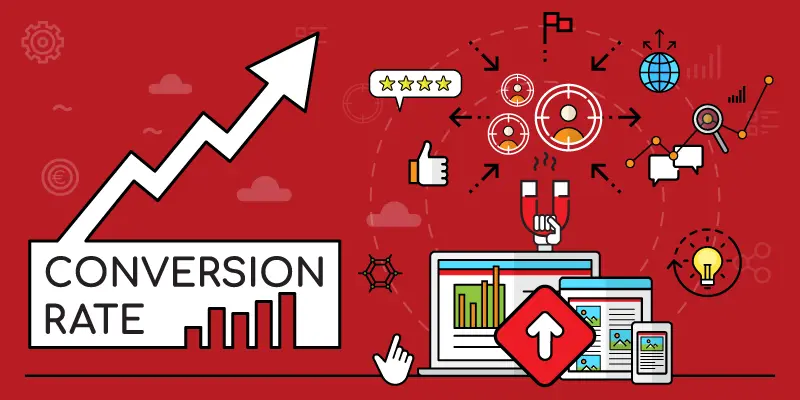
Your website is a mighty weapon, but is it doing as much as it can do? Most companies concentrate on traffic generation, but neglect a very important aspect: conversion rate optimization (CRO). A high conversion rate translates to more sales, more leads, and a superior return on your marketing budget, without necessarily having more traffic.
1.Know Your Audience and Their Journey
You have to know whom you're optimizing for before you can optimize.
Develop Buyer Personas: Make in-depth profiles of your target buyers, including demographics, psychographics, pain points, goals, and online behavior.
Map the User Journey: Know the general path visitors follow through your website, from arrival to conversion. Know where there could be roadblocks or decision points.
Collect User Feedback: Utilize surveys, polls, live chat logs, and user testing to directly ask visitors about their experience and what prevents them from converting.
2.Optimize Your Call-to-Actions (CTAs)
Your CTAs are the gateways to conversion. Make them impossible to ignore and easy to act upon.
Be Clear and Concise: Use action-oriented verbs that tell users exactly what to do
Create Urgency/Scarcity (Ethically): Use words like "Limited Stock," "Offer Ends Soon," or "Only X Spots Left" to provoke immediate action.
Make Them Visually Prominent: Utilize contrasting color, generous use of white space, and a size that's prominent.
Strategic Placement: Position CTAs where they're applicable and accessible, both above the fold and at natural points along the page.
Test Different CTAs: A/B test different wording, colors, sizes, and placements to see what resonates best with your audience.
3.Simplify Your Forms
Long, complicated forms are notorious conversion killers.
Minimize Fields: Only ask for essential information. Can you get away with just a name and email for initial contact?
Use Multi-Step Forms: For longer forms, break them down into smaller, digestible steps to reduce perceived effort.
Clear Instructions: Use clear labels and convenient inline validation to assist users.
Pre-populate Data: Pre-populate fields for users who are logged in or have submitted data before.
Mobile-Friendly Design: Make forms simple to fill out on any screen.
4.Improve Website Speed and Responsiveness
Speed is everything in today's fast world.
Optimize Images: Weigh down images without compromising quality.
Minify Code: Minify CSS, JavaScript, and HTML file sizes.
Leverage Browser Caching: Allow returning visitors to load your site faster.
Use a Content Delivery Network (CDN): Distribute your content across servers globally for faster delivery.
Mobile Responsiveness: Your site must be perfectly navigable and visually appealing on smartphones and tablets. Google prioritizes mobile-first indexing, and users expect a seamless experience.
5.Build Trust
Visitors won't convert if they don't trust you.
Show Social Proof: Display reviews, ratings, testimonials, case studies, and logos of customers clearly.
Security Badges: Employ SSL certificates (HTTPS) and show trust badges on pages where necessary, particularly e-commerce shopping cart pages.
Clear Privacy Policy: Have your privacy policy easily accessible and clear regarding how you treat data.
Professional Design: A minimalist, contemporary, and user-friendly website design gives confidence.
About Us Page: Tell your story, introduce your team, and show the human side of your business.
6.Optimize Your Landing Pages
Landing pages are designed for a single purpose: conversion.
Remove Distractions: Eliminate unnecessary navigation menus, sidebars, or other elements that could pull users away from the CTA.
Strong Headline: A compelling headline that immediately communicates the value proposition.
Benefit-Oriented Copy: Emphasize how your service or product fixes the problem of the user or enhances their life, instead of just mentioning features.
Clear Value Proposition: Why do they need to go with you? What differentiates you?
Match Ad Copy: Maintain consistency between your ad copy and the landing page copy.
7.Conduct A/B Testing
Don't guess; test! A/B testing (or split testing) is the process of comparing two versions of a webpage element to see which performs better.
Test One Element at a Time: Headlines, images, CTA text/color, form fields, page layouts, etc.
Create a Hypothesis: Before running your test you might have some idea which will perform better and why
Collect sufficient data: Run your test long enough for statistically significant results.
Analyze and Implement: Apply the winning variations to improve your conversion rates.
8.Provide Excellent Customer Support
Sometimes, a little help is all it takes to push a hesitant visitor to convert.
Live Chat: Offer instant support for questions or concerns.
Comprehensive FAQs: Address common questions proactively.
Clear Contact Information: Make it easy for visitors to reach you via phone or email.
Chatbots: Use AI-powered chatbots for 24/7 basic support and lead qualification.
9.Sense of Urgency or Scarcity (Ethically)
This is a generic tactic that falls under CTAs but deserves a discussion point on its own.
Time-Limited Offers: "Flash Sale Ends in 24 Hours!"
Limited Stock Notifications: "Only 3 Left in Stock!"
Event Deadlines: "Registration Closes Friday!"
Bonuses for Early Action: "Sign Up Today and Get a Free Bonus!"
Use these tactics judiciously, and only when appropriate; do not use false urgency, as this can harm trust.
More from our blog
See all posts



Recent Posts
- Successful Influencer Marketing Strategy December 2, 2025
- Instagram engagement December 2, 2025
- Effective Strategies for Increasing Your Website’s Conversion Rate December 2, 2025