

Successful Influencer Marketing Strategy
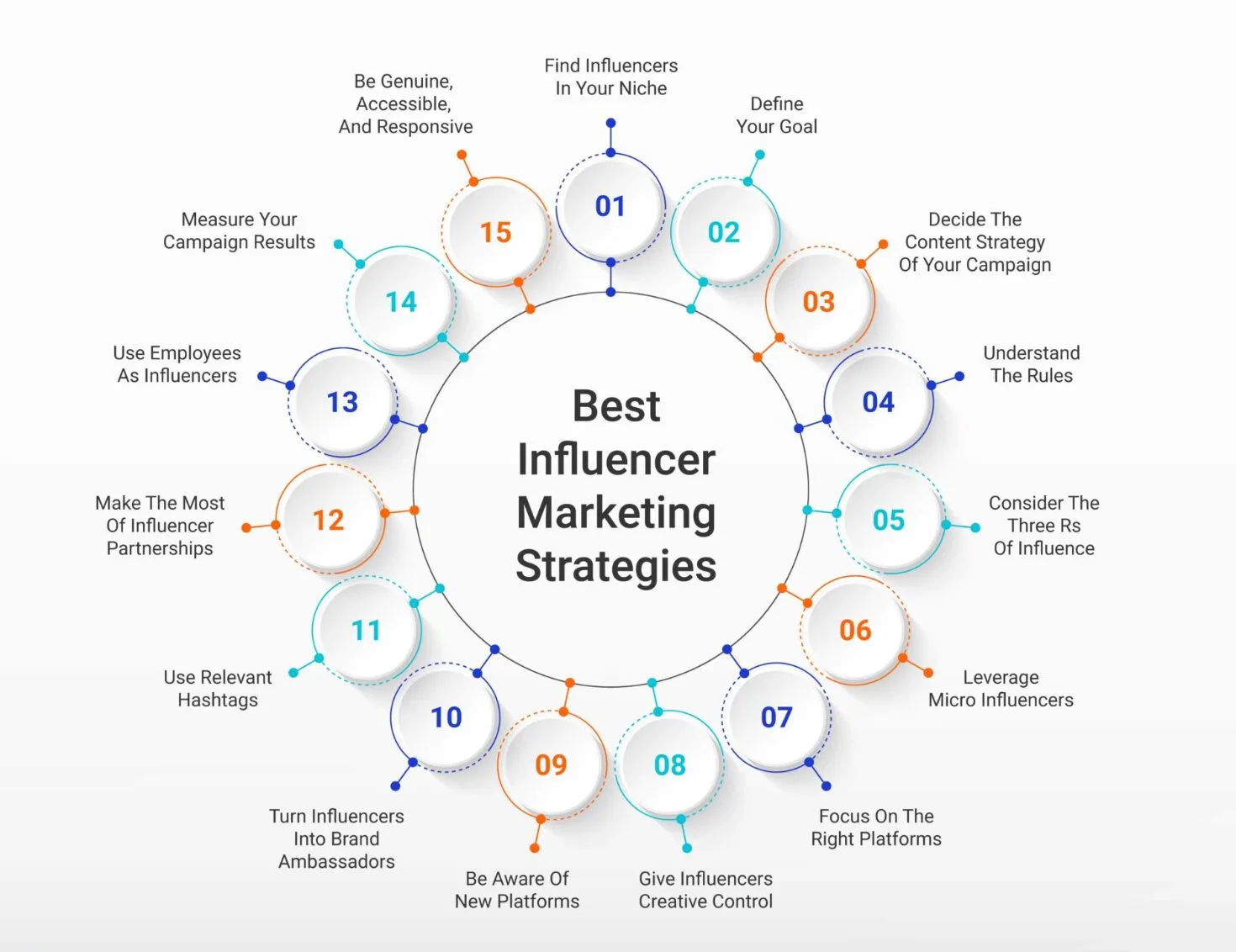
1.Define Your "Why":
Set Clear Goals & KPIs:
You have to know what you want to achieve before reaching out to an influencer. Vague results beget vague goals. Be SMART about your objectives:
Specific: Do you want to increase brand awareness, drive website traffic, generate leads, boost sales, or improve brand sentiment?
Measurable: How will you measure success? (i.e., website traffic using UTM codes, sales with unique promo codes, engagement rate, brand mentions).
Achievable: Are your goals achievable with your budget and resources?
Relevant: Is this campaign aligned with your overall marketing and business objectives?
BoundTime: When do you anticipate seeing these results?
Examples:
"Increase website traffic by 20% through influencer-generated content within three months."
"Drive 500 new email sign-ups by providing a special discount code via influencer promotions during Q3."
"Increase brand sentiment (positive mentions) by 15% among Gen Z consumers within six weeks."
2.Know Your Audience Inside and Out
The most successful influencer campaigns are founded on a strong knowledge of your target market. Who are you attempting to reach out to? What are their demographics, interests, concerns, and favorite social media channels? If you have an idea of your audience, you can then choose influencers whose followers actually overlap with your ideal customer profile. Do not only consider follower numbers; consider their audience's demographics and engagement quality.
3.Find the RIGHT Influencers (Quality Over Quantity)
This is literally the most important step. Having a huge number of followers is useless if they are not active or are not in your target market. Check for:
Authenticity and Trust: Do they actually relate to their viewers? Do their endorsements sound real?
Niche Relevance: Is their content and personal brand applicable to your product or service? For instance, a fashion influencer would likely not be best suited to a B2B software business.
Engagement Rate: Monitor high comments, shares, and saves rather than likes. A micro-influencer (10K-100K followers) or even nano-influencer (1K-10K followers) might work better with a super-engaged niche than some celebrity with millions of disconnected.
Content Quality: Do they create quality visuals and engaging stories?
Brand Alignment: Are their values and voice consistent with your brand's image?
Influencer discovery and vetting can be assisted through tools and platforms, but always manually check for yourself.
4.Write a Compelling & Honest Brief
Once you have the potential partners, give them a clear, brief, and motivating brief. It should have:
Campaign Goals: Restate what you want to achieve.
Key Messaging: What are your key messages you want to share?
Brand Guidelines: Your brand voice, visual aesthetics, and any other special do's and don'ts.
Deliverables: What kind of content are you expecting (i.e. 1 Instagram Reel, 3 Stories, 1 static post)? How often?
Timeline: Hard deadlines for delivery of submitted content, approval and the posting date.
CTA : What do you want them to DO in their audience? (e.g. "Shop the link in bio," "Use code [BRANDNAME] for 15% off," "Visit our profile").
Compensation: Ensure clarity on payment terms (flat fee, free products, affiliate commissions, etc).
Disclosure: Reiterate the clear FTC/ASCSI disclosures required. #ad and #sponsored are great examples.
Transparency goes a long way in building trust.
Don't forget to allow them some creativity! They usually know their audience better.
5.Activate Authentic Relationships
Influencer marketing can't be transactional. Work on establishing long-term influencer relationships with the people who are genuinely enthusiastic about your brand. This brings more organic content and long-term advocacy. Engage with their content, share it, and treat them as rightful partners. Look towards ambassador programs for your high-performing influencers.
6.Budget Wisely & Negotiate Effectively
Influencer rates vary widely. Research industry benchmarks and be prepared to negotiate. Consider a blend of influencer tiers (nano, micro, macro) to optimize your budget and reach. Don't forget to budget for:
Influencer fees
Content usage rights (if you want to repurpose their content for ads)
Any product costs
Potential paid amplification to boost top-performing influencer posts
7.Monitor, Measure, and Optimize
The job does not end when the content is live. Continuously track campaign performance against your established KPIs.
Monitor your metrics: Apply unique UTM parameters to links, unique promo codes, and built-in Instagram insights.
Analyze engagement: Examine likes, comments, saves, shares, and story views.
Evaluate ROI: Was the campaign successful? Did it drive a positive return?
Collect qualitative feedback: How did the audience respond in the comments?
Be flexible: If something isn't working, be prepared to adjust your strategy. Learn from each campaign to refine future efforts.
The Bottom Line:
It is about creating authentic connections and actual influence through trusted voices telling your brand's story rather than chases on viral moments. By providing well-defined objectives, very carefully handpicking and truly having an effective relationship with partners, astutely measuring the results of efforts involved, one can unlock the massive potential of influencer marketing to drive significant, measurable results.
More from our blog
See all posts



Recent Posts
- Successful Influencer Marketing Strategy December 2, 2025
- Instagram engagement December 2, 2025
- Effective Strategies for Increasing Your Website’s Conversion Rate December 2, 2025